
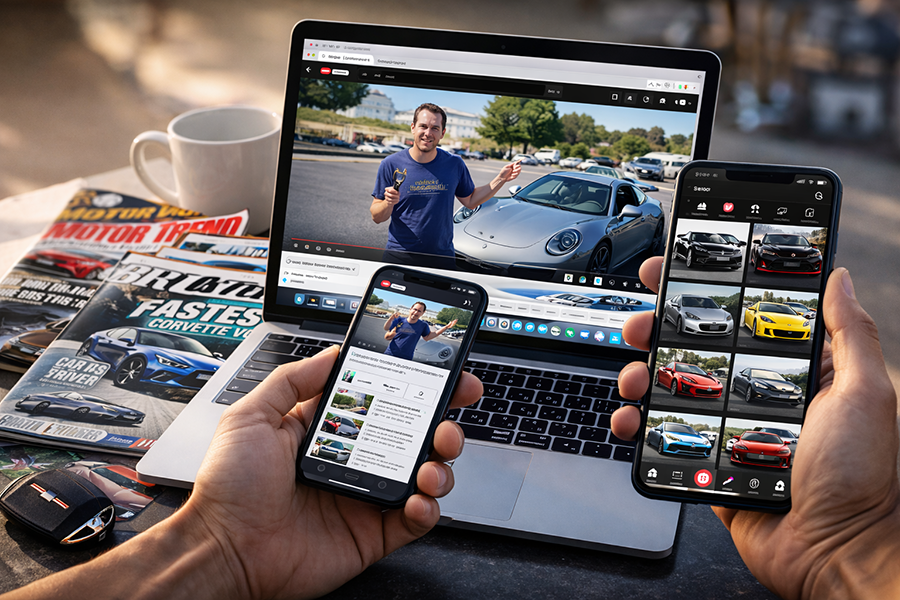
If you’ve spent any time scrolling through car content in the past decade, you’ve probably noticed a shift: car media isn’t what it used to be. The magazines, TV shows, and cable series that once defined car culture are transforming, or vanishing entirely. While platforms and formats evolve, one question remains: what do fans actually want from car content today?
Two decades ago, car culture lived in print and on broadcast television. Fans eagerly awaited the latest issue of Car and Driver or MotorTrend, or tuned in for Sunday evening episodes of carefully scripted shows. These experiences were slow, deliberate, and immersive. They gave enthusiasts the space to savor specifications, analyze styling, and follow detailed reviews. Today, the pace has changed. The internet has flipped car media upside down. YouTube videos now rack up views based on dramatic revs and catchy thumbnails, social media favors quick, visually striking content, and traditional publications struggle to monetize pages that once sold glossy ads. Fans still crave depth and credibility, but now they expect it fast, on-demand, and entertainingly packaged.
One of the most striking changes is the rise of personality-driven content. Where magazines relied on editorial authority, today’s fans follow people. Creators like Doug DeMuro, ChrisFix, and Shmee150 have built trust and engagement not because they work for a brand, but because they share their genuine enthusiasm, honesty, and humor. Authenticity has become as important as technical knowledge. Fans want a voice they can relate to, someone who loves, or honestly critiques a car with the kind of passion they remember from their first driveway burnout or car show visit.
Video has also become the dominant medium for a reason. Cars are visceral and emotional. You can’t fully convey a V8’s exhaust note, a cornering drift, or the feel of a manual shifter through text alone. Visual storytelling immerses viewers, while text-based reviews now serve more as context, supplementary analysis, or detailed specifications. Fans want to see, hear, and almost feel the experience themselves. A spreadsheet of horsepower and torque numbers can no longer capture that excitement.
Interestingly, the current wave of car content shows a growing fascination with nostalgia. While hypercars and the latest performance machines dominate headlines, enthusiasts increasingly gravitate toward vehicles with character and history. Restomods, vintage muscle cars, and even early 2000s performance cars are gaining attention, not just for their specs, but for their stories. Who built them? What challenges did they overcome? Why do they still matter today? Fans are drawn to content that provides context, personality, and a sense of connection to the machines they love.
Car media has also become more interactive. Fans no longer passively consume content, they participate. Comments, discussion threads, Discord communities, and live Q&A sessions allow enthusiasts to ask questions, share experiences, and weigh in on debates about modifications, maintenance, or model comparisons. Car culture is social, and fans increasingly expect media to reflect that social dimension. Content that fosters conversation and community stands out far more than content that simply broadcasts information.
Transparency and honesty have also emerged as non-negotiables. As the online landscape has expanded, some creators leaned too heavily into clickbait or sponsored content, which can alienate knowledgeable fans. Today’s audiences want unfiltered insights, balanced reviews, and thoughtful analysis. They appreciate content that celebrates a car’s strengths while honestly critiquing its flaws. Trust, more than polish or production value, drives loyalty.
Despite all these changes, the underlying principle of car media hasn’t shifted: fans still love cars. What has changed is how they want to experience that love. They seek authenticity, accessibility, immersion, and connection. Successful outlets now combine cinematic video, expert insight, personality-driven commentary, and community engagement across multiple platforms. Those who understand this evolving landscape are thriving, while those clinging to old models of media risk being left behind.
In the end, car media isn’t dying, it’s evolving to meet the expectations of modern enthusiasts. Fans want to be entertained, informed, and connected, all at once. They want content that respects their intelligence, engages their senses, and makes them feel like part of a shared automotive world. The platforms may shift, the formats may change, but the passion for cars remains constant. And that, perhaps, is the one thing that never goes out of style.